A lot of people are scared of making things that have yeast in them. They CAN be scary, but they’re also lots of fun and very rewarding. Here are some great yeast dough tips that everyone needs to know:
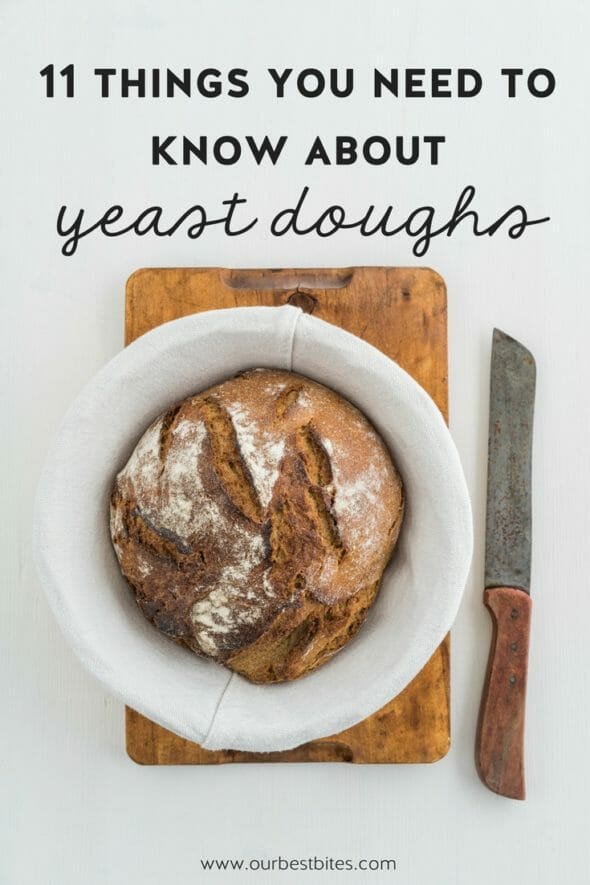
- Use bread machine yeast (like Red Star brand) rather than regular yeast, even if you’re not using a bread machine. It’s less tempermental and more forgiving.
- Make sure the liquid you’re using to dissolve the yeast is warm enough (between 100-115) for the yeast to grow, but not too hot because that will kill the yeast. My rule of thumb is a temperature that you’d be comfortable taking a hot shower in, but not so hot that you couldn’t wash your hair or face in it.
- Keep your yeast in the freezer; it will last longer.
- Keep your kitchen warmer than you normally would.
- Sugar feeds yeast, salt can kill it. This is part of why you let yeast dissolve and rise before adding it to other ingredients–it activates the yeast enough to a point where the salt won’t kill it. If you’re having a hard time getting your yeast to bubble, add a little sugar.
- Allow dough to rise in a metal or glass bowl. They retain heat better than plastic bowls and you’ll get a better rise. You can also run the bowl you’re using under some hot water (and then dry it, then spray it with non-stick cooking spray for easy cleanup) before adding the dough so it will be nice and warm.
- Be patient. Yeast breads can take a long time.
- You’ll use more flour if you’re kneading with your hands than you will with a Bosch or a Kitchenaid.
- A soft dough will firm up as it rises the first time, so try not to add too much flour. It’s better to err on the side of not adding enough flour than adding too much–you can always add more flour, but you can’t take it away once it’s in the dough.
- Butter on top of the dough will make it soft; olive oil will make it crispy.
- Shortening can make lighter, fluffier breads, but butter tastes infinitely better. Nine times out of ten, go for the butter.
*Disclaimer: this post includes affiliate links.









Questions & Reviews
I am looking for a good recipe for sprouted wheat bread and some instructions on how to make it. I’ve tried a few from Youtube and I’m not getting a loaf which pleased me.
This is really helpful! Thanks so much for posting all these tips in one place. I will definitely be referring back to this often.
Definitely all-purpose unless a recipe specifies otherwise. 🙂
Should I use self rising flour or all purpose?
Thank you for this post! Every time I've made something with yeast (except pizza dough) it's just been sort of…"meh" I'll definitely try these tips next time!
can you half a recipe using yeast? do you have to follow any special rules, or just half everything listed?
Trimble–Kneading is actually to activate and strengthen the gluten (protein) in the flour. It's important for the dough rising because when the dough has been properly kneaded, the gluten will be strong enough to give your dough a nice rise, but the kneading and the yeast don't have a whole lot to do with each other.
Hope that helps! 🙂
Does kneading have any effect on how well the yeast will rise (other than just making sure it's distributed throughout all of the dough)?
You can really do it however–I usually sprinkle the yeast on top of the water and then stir it a few times. It won’t completely dissolve, you just want to try and get everything wet.
Hope that helps! 🙂
Okay this may be really simple but I don’t know ANYTHING about using yeast so… I put the yeast in a bowl and then pour in the warm water…do I then stir until all the yeast is completely mixed in? TIA!